

Governance Finances Under Scrutiny
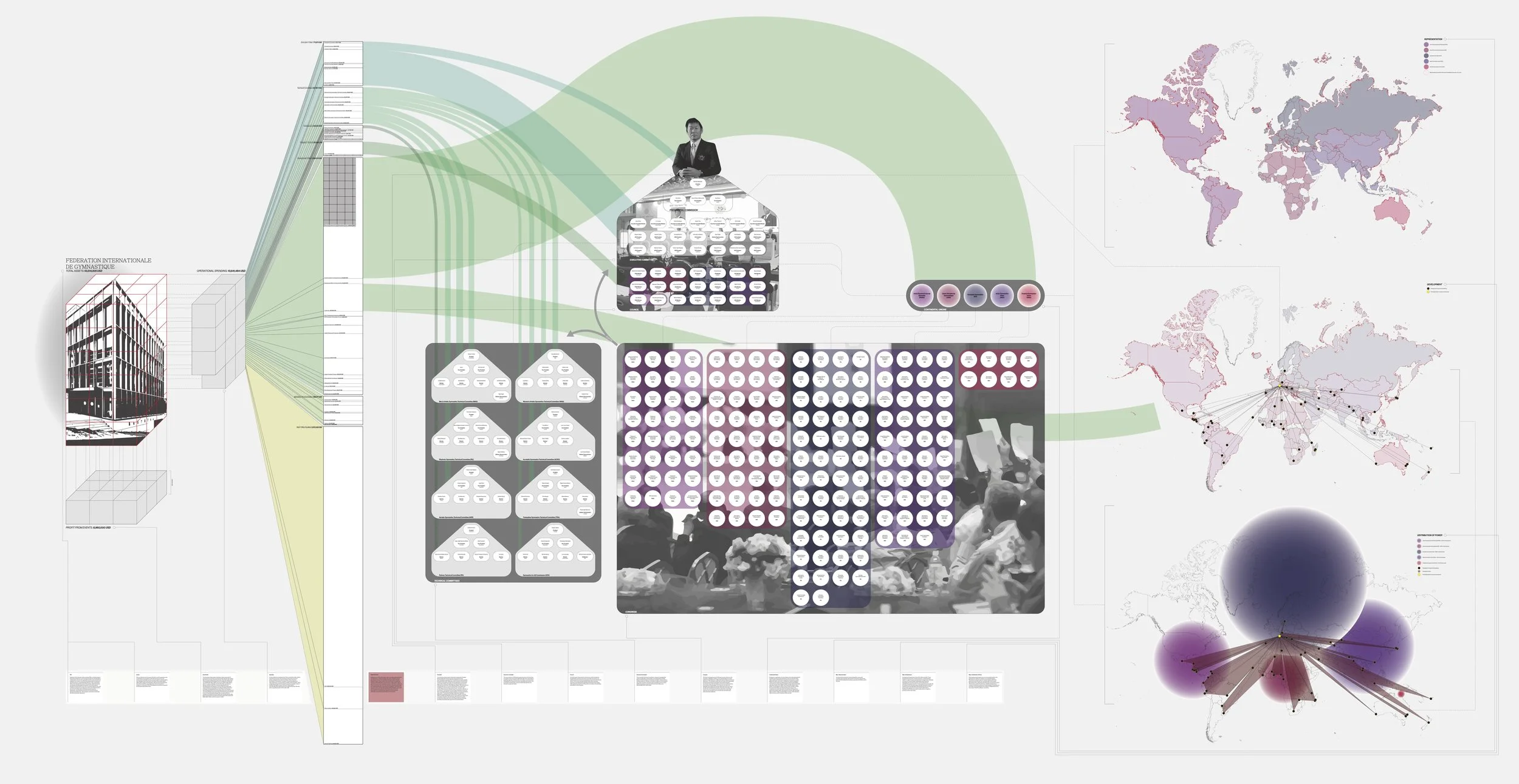
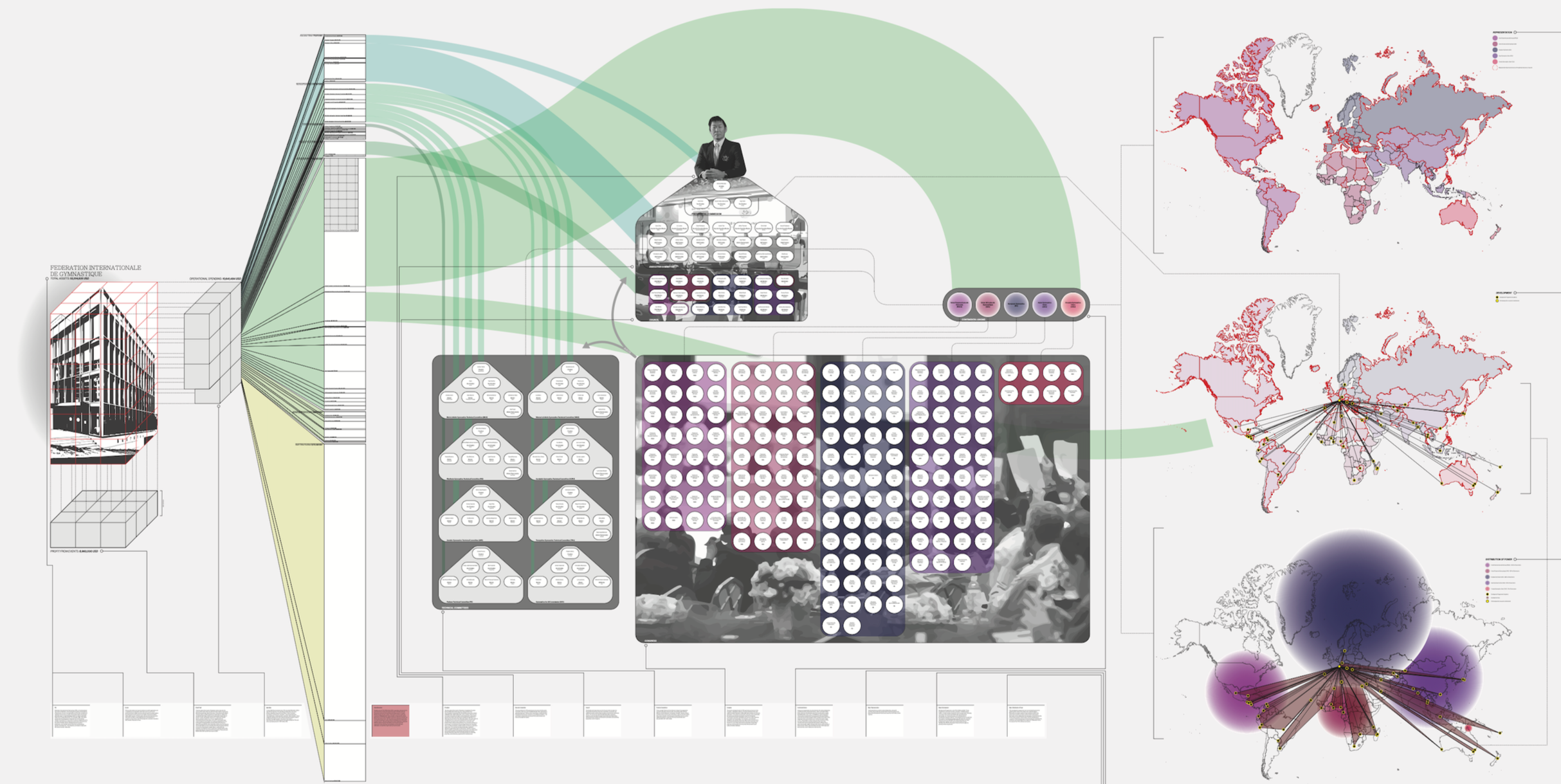
The G4CI Power Map forensically examines the financial structures that underpin FIG, now known as World Gymnastics - to understand the imbalanced power structures that exist within the sport. World Gymnastics operates a complex and opaque system, and this map allows us to shine a light on what is really happening inside the international governing body - to show how much safeguarding is valued (or not) by decision makers in the sport.

Power Map
The FIG (now World Gymnastics) Power Map was created to make sense of the complex and opaque structures that are used to govern the sport of gymnastics, at the international level.
Based on the most recent available figures from 2023, the FIG map examines finances, who funds the sport, where revenue comes from, and whether money reaches gymnasts.
The map was researched and designed by Kevin Howard in response to a commission from G4CI; in the process of the commission, it became clear that understanding the organisation’s structure was just as crucial as exploring how money flows through the organisation.
Gymnastics is global, multi-disciplinary, and historically hierarchical. This complexity can obscure the reality of who makes decisions, who benefits financially from the sport, and how athlete welfare is prioritised.
The map exposes the gap between the gymnasts who create value, and the institutions that extract it. World Gymnastics controls millions in revenue, sits on vast assets, and sets the rules for the sport, yet an outrageously small amount of this money is being used to protect athletes and prevent abuse in the sport. Instead the map shows how safeguarding at World Gymnastics is chronically underfunded and under-prioritised.
By mapping committees, federations, and funding flows, the map reveals where power and influence truly lie, who defines what “world-class” gymnastics means, and whose voices are excluded.
Visualising these structures, the map highlights how decision-making directly affects poor athlete safety and wellbeing in the sport. Even based on 2023 figures, it provides a crucial lens for understanding accountability, directing resources, and creating a sport where gymnasts can thrive, not just perform.

Congress
The Congress is the largest branch of FIG's governance structure, and is a delegation made up of one representative from each national member federation, totalling 165 representatives at maximum attendance. The Congress meets every two years and is responsible for hearing and voting on propositions from the Presidential Commission, Executive Committee, and Council as well as electing the members of these bodies. The Congress, as an electoral delegation, sits outside of the primary governance structure which includes the Presidential Commission, Executive Committee, and Council. As such, it does not receive any allocation of operating expenses, even though it is the only body that represents each national member federation.
World Gymnastics In the News
“Several staff members of the FIG, based in Lausanne, report poor management marked by a toxic working environment. At the centre of the tensions is the Secretary General, the subject of multiple complaints to Human Resources and an external report. Interviews conducted by Le Temps with employees, former employees, and sports officials... paint a picture of an organisation in crisis.”
“In May 2025, an investigation by Le Temps revealed serious shortcomings within the International Gymnastics Federation (FIG), based in Lausanne. Testimonies from employees and documents consulted described an organisation marked by inappropriate behaviour, bullying and ineffective management of projects and finances. ”
The governance of gymnastics has historically excluded voices of athletes in almost all its decision-making processes. World Gymnastics receives its funding from the IOC; gymnastics is the second most watched discipline at the Olympics. It is profoundly extractive to build on and use people's talent without giving them a fundamental say in how the sport is governed.
— Kat Craig, international human rights lawyer | CEO of Athlead | Strategic litigation advisor, G4CI